Kawah Ijen Hike Guide: How to See the Blue Fire Volcano from Banyuwangi
Discover how to hike Kawah Ijen from Paltuding Hiking Post, witness the famous blue flames, and visit the active sulphur mines inside the crater.
11/13/20254 min read
Overview
Distance: 9.8 km
Average Duration: 4 – 4.5 hours
Difficulty Level: Easy / Intermediate
Total Elevation Gain: Approx. 600 m
Start/Finish: Paltuding Hiking Post – Paltuding Hiking Post
Kawah Ijen, located in East Java near Banyuwangi, is one of Indonesia’s most unique volcanic experiences. Known for its surreal blue fire phenomenon and vast sulphur mines, this hike offers an unforgettable mix of beauty and intensity. Watching the sunrise above the Ijen Crater while sulphur smoke drifts across the lake is something you won’t forget.
Planning Your Hike to Kawah Ijen
Getting There
We were staying in a rainforest retreat in Banyuwangi and arranged both drop-off and collection with our hosts. Since we were doing the Ijen Crater sunrise hike, our alarms were set for 2 a.m. — though I somehow managed to get ready an entire hour early thanks to jet lag and time-zone confusion.
Eventually, everyone woke up and we were shown to a large truck that took us to Paltuding Hiking Post, the official starting point for the Kawah Ijen trek. The drive took about 1.5 hours through the pitch-black forest roads. Most people dozed off, but I couldn’t nap — too excited to finally see the blue volcano I’d read so much about.
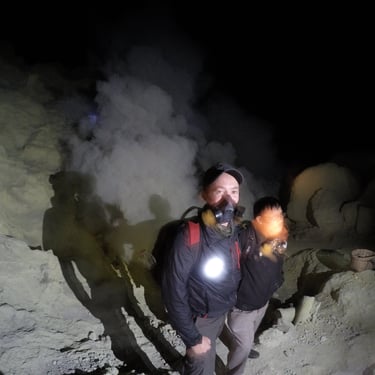
Upon arrival, we met our guide, Moh. He grouped us with another couple from France and did a quick gear check before handing out gas masks. They were the lightweight kind used for spray painting — not exactly industrial-grade. I initially thought it was a bit over the top; I’d visited volcanoes before, and they usually just smell faintly of sulphur.
I was wrong.
Hiking Up to Ijen Crater
The climb started gently but quickly turned steep. Even the fittest people in the group were breathing heavily after the first section. We took short breaks, but couldn’t stop for long — the goal was to reach the crater before sunrise to witness the blue fire.
As we ascended, the trail became more manageable. The night air was cool, and the only light came from our headlamps weaving up the mountain. After about 90 minutes, we reached the crater rim and queued to descend into the Kawah Ijen Crater.
Moh double-checked our masks and reminded us not to linger too long in dense smoke. You could smell the sulphur strongly now — a sharp, choking scent that burned the throat. We began the steep descent down the narrow, makeshift steps toward the glowing crater.
People were coming up as we went down, and the path was tight. When the wind shifted, thick sulphur clouds rolled through, burning our eyes and throats even through the masks. It was rough going. But we pushed on, moving carefully through the haze until we reached the sulphur mining area near the base.
Reaching the Blue Fire Volcano
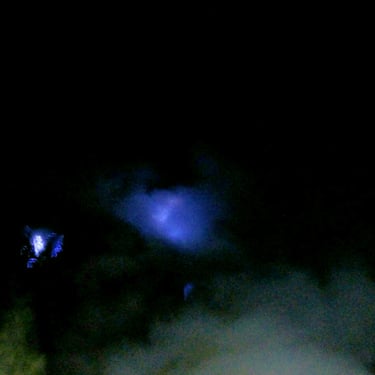
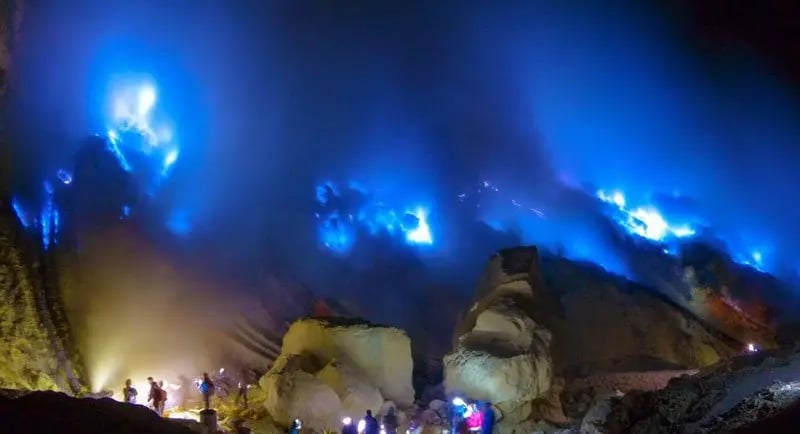
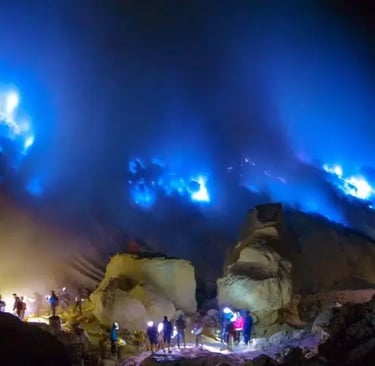
It wasn’t the massive blue inferno you see in postcards — but there it was, faint blue flames flickering where the miners were working. The “blue fire” of Kawah Ijen is created when sulphuric gases ignite on contact with oxygen, glowing electric blue in the dark.
I tried to take a few photos, but the clouds made it difficult. The atmosphere was surreal: miners with torches hauling bright-yellow sulphur blocks on their shoulders, the hiss of burning gas, and that otherworldly blue light illuminating the crater walls.
After a few minutes, Moh encouraged us to start heading back up. The smoke thickened, and visibility dropped to almost nothing at times. On the way up, I found myself pushing through crowds still descending — not ideal when you’re already gasping for air. I wished people would step aside for those climbing out.
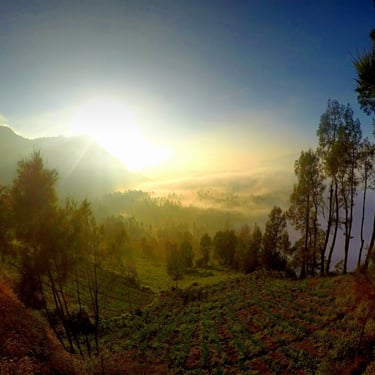
Finally, we reached the top again, lungs burning but grateful for fresh air. We walked along the ridge, found a quiet spot, and sat down to watch the Ijen sunrise. As the light crept over the horizon, it revealed the stunning turquoise crater lake below — calm, toxic, and impossibly beautiful.
The Descent and Meeting the Miners
On the way down, the atmosphere felt lighter. The French couple we’d been grouped with matched our pace and fitness level perfectly. We chatted, laughed about the chaos in the crater, and agreed the gas masks hadn’t done much.
As we descended, several Ijen sulphur miners were selling hand-carved sulphur figurines. My wife bought a few — partly as souvenirs, partly to support them. One miner told us how their work drastically reduces life expectancy due to the fumes and heavy loads. It was humbling to hear and see firsthand how hard they work.
Back at Paltuding car park, everyone climbed into the truck, exhausted. Within minutes, everyone was asleep for the bumpy ride back through the forest.
Final Thoughts: Why Hike Kawah Ijen
Despite the early start, the fumes, and the chaos inside the crater, the Kawah Ijen Blue Fire hike is absolutely worth it. Seeing the active volcano, watching sulphur smoke rise as the sun rises over East Java, and meeting the miners who work in such extreme conditions — it’s an experience that sticks with you.
The total hike covers around 9.8 km round-trip, with roughly 600 m elevation gain — doable for most people with moderate fitness. The trail is well-marked, and local guides like Moh make it manageable and safe.
If you’re planning a trip to East Java or Banyuwangi, don’t miss the chance to hike Kawah Ijen Crater. Just be prepared for strong sulphur smoke, bring extra water, and make sure your gas mask actually works.
It’s one of Indonesia’s most unique and mesmerising volcanic experiences — a true adventure into the heart of a living volcano.